
SECUREU

Industry & Technology Security

Cybersecurity considerations for specific industries and emerging technologies including IoT, blockchain, gaming, automotive, and critical infrastructure. Targets decision-makers in specialized sectors.

cyber security by secureu

The Importance of Cybersecurity in the Gaming World

Introduction In the fast-evolving landscape of the digital age, where pixels meet passion, the gaming world stands as a thriving ecosystem. With millions of players engaging in virtual realms, the importance of cybersecurity in the gaming industry cannot be overlooked. As gamers immerse themselves in captivating virtual adventures, the guardians of the game, both players and platforms, must be equipped to fend off the lurking threats in the digital shadows. Understanding the Stakes Gaming platforms have become lucrative targets for cybercriminals due to the vast amounts of personal and financial information stored within them. Player profiles, payment details, and even in-game assets have become digital treasures for those seeking to exploit vulnerabilities. As the gaming industry continues to soar, so does the need for robust cybersecurity measures. Player Vigilance: Shielding the Digital Self Players are the frontline defenders of their gaming experience. It begins with simple yet effective practices, such as creating strong, unique passwords for gaming accounts. The use of two-factor authentication adds an extra layer of defense, ensuring that even if passwords are compromised, unauthorized access remains a difficult challenge to overcome. Gamers should also stay informed about phishing scams that often masquerade as game-related emails or messages. Clicking on suspicious links can lead to account compromise or the installation of malicious software. A watchful eye and a healthy dose of skepticism are essential tools in a player’s cybersecurity arsenal. Platform Armour: Building Fortresses Against Cyber Threats Gaming platforms, akin to medieval castles, must fortify their defenses to repel cyber invaders. Regular security audits and updates are crucial to patch vulnerabilities and stay ahead of evolving threats. Encryption of sensitive data, both in transit and at rest, is non-negotiable in safeguarding player information. Robust firewalls and intrusion detection systems act as vigilant gatekeepers, monitoring and filtering incoming traffic for potential threats. The implementation of advanced anomaly detection technologies can identify unusual patterns of behavior, helping to thwart attacks before they can cause significant damage. Securing the In-Game Economy In the gaming world, virtual currencies and in-game assets have real-world value. From virtual gold to rare skins, cybercriminals are drawn to these digital treasures. Blockchain technology has emerged as a game-changer in securing in-game economies. By decentralizing transactions and ensuring transparency, blockchain makes it significantly more challenging for cybercriminals to manipulate or exploit the system. Educating the Gaming Community A well-informed gaming community is a powerful ally in the fight against cyber threats. Gaming platforms should invest in user education programs, teaching players about the latest cybersecurity risks and best practices. Creating a culture of security consciousness within the gaming community not only protects individuals but strengthens the entire ecosystem. The Future of Gaming Security As technology advances, so do the tactics of cybercriminals. The future of gaming security lies in the integration of artificial intelligence and machine learning. These technologies can analyze vast amounts of data in real time, identifying and responding to emerging threats with unprecedented speed and accuracy. Predictive analytics can anticipate potential vulnerabilities, allowing for proactive measures before an attack occurs. Conclusion: United We Stand, Divided We Fall In the dynamic world of gaming, where fantasy meets reality, the guardians of the game must unite to face the growing challenges of cybersecurity. Players, platforms, and the industry at large must collaborate to create a secure and resilient environment. Through vigilance, education, and the embrace of cutting-edge technologies, the gaming community can continue to explore, compete, and connect in the digital realms, confident in the knowledge that their adventures are shielded from the shadows of the virtual world. Reach out to us today & let’s talk about how we can help you! Secure Your Gaming Platform with SECUREU Gaming platforms handle massive amounts of user data and financial transactions. SECUREU’s penetration testing services help identify vulnerabilities in your gaming applications before they can be exploited. Check out our case studies to see how we have secured platforms across industries, or contact us for a tailored security assessment.

The Importance of Cybersecurity in the Gaming World Read More »

Introduction In the fast-evolving landscape of the digital age, where pixels meet passion, the gaming world stands as a thriving ecosystem. With millions of players engaging in virtual realms, the importance of cybersecurity in the gaming industry cannot be overlooked. As gamers immerse themselves in captivating virtual adventures, the guardians of the game, both players and platforms, must be equipped to fend off the lurking threats in the digital shadows. Understanding the Stakes Gaming platforms have become lucrative targets for cybercriminals due to the vast amounts of personal and financial information stored within them. Player profiles, payment details, and even in-game assets have become digital treasures for those seeking to exploit vulnerabilities. As the gaming industry continues to soar, so does the need for robust cybersecurity measures. Player Vigilance: Shielding the Digital Self Players are the frontline defenders of their gaming experience. It begins with simple yet effective practices, such as creating strong, unique passwords for gaming accounts. The use of two-factor authentication adds an extra layer of defense, ensuring that even if passwords are compromised, unauthorized access remains a difficult challenge to overcome. Gamers should also stay informed about phishing scams that often masquerade as game-related emails or messages. Clicking on suspicious links can lead to account compromise or the installation of malicious software. A watchful eye and a healthy dose of skepticism are essential tools in a player’s cybersecurity arsenal. Platform Armour: Building Fortresses Against Cyber Threats Gaming platforms, akin to medieval castles, must fortify their defenses to repel cyber invaders. Regular security audits and updates are crucial to patch vulnerabilities and stay ahead of evolving threats. Encryption of sensitive data, both in transit and at rest, is non-negotiable in safeguarding player information. Robust firewalls and intrusion detection systems act as vigilant gatekeepers, monitoring and filtering incoming traffic for potential threats. The implementation of advanced anomaly detection technologies can identify unusual patterns of behavior, helping to thwart attacks before they can cause significant damage. Securing the In-Game Economy In the gaming world, virtual currencies and in-game assets have real-world value. From virtual gold to rare skins, cybercriminals are drawn to these digital treasures. Blockchain technology has emerged as a game-changer in securing in-game economies. By decentralizing transactions and ensuring transparency, blockchain makes it significantly more challenging for cybercriminals to manipulate or exploit the system. Educating the Gaming Community A well-informed gaming community is a powerful ally in the fight against cyber threats. Gaming platforms should invest in user education programs, teaching players about the latest cybersecurity risks and best practices. Creating a culture of security consciousness within the gaming community not only protects individuals but strengthens the entire ecosystem. The Future of Gaming Security As technology advances, so do the tactics of cybercriminals. The future of gaming security lies in the integration of artificial intelligence and machine learning. These technologies can analyze vast amounts of data in real time, identifying and responding to emerging threats with unprecedented speed and accuracy. Predictive analytics can anticipate potential vulnerabilities, allowing for proactive measures before an attack occurs. Conclusion: United We Stand, Divided We Fall In the dynamic world of gaming, where fantasy meets reality, the guardians of the game must unite to face the growing challenges of cybersecurity. Players, platforms, and the industry at large must collaborate to create a secure and resilient environment. Through vigilance, education, and the embrace of cutting-edge technologies, the gaming community can continue to explore, compete, and connect in the digital realms, confident in the knowledge that their adventures are shielded from the shadows of the virtual world. Reach out to us today & let’s talk about how we can help you! Secure Your Gaming Platform with SECUREU Gaming platforms handle massive amounts of user data and financial transactions. SECUREU’s penetration testing services help identify vulnerabilities in your gaming applications before they can be exploited. Check out our case studies to see how we have secured platforms across industries, or contact us for a tailored security assessment.

Untitled Design 3 1600 1

The Importance of Cybersecurity in Safeguarding Our Critical Infrastructure

Introduction In our increasingly connected world, critical infrastructure is like the beating heart that keeps our society running smoothly. From the power grids that light up our homes to the transportation systems that get us from place to place, these crucial systems are the backbone of modern life. Data Security Companies in Kochi, However, just like any vital organ, they need protection, and that’s where cybersecurity comes in. In this article, we will delve into what critical infrastructure is and why it requires robust cybersecurity measures. What Is Critical Infrastructure? Critical infrastructure refers to the essential systems and assets that our society heavily relies upon for its functionality and well-being. These systems can be categorised into various sectors, including: Why Does Critical Infrastructure Need Protection? Critical infrastructure is the lifeblood of any nation, and its importance cannot be overstated. Here’s why safeguarding it is paramount: How Cyber Security Safeguards Critical Infrastructure To counter these threats, cybersecurity is crucial. It involves implementing a set of technologies, processes, and practices designed to protect critical infrastructure from cyberattacks and unauthorized access. Here are some key ways in which cybersecurity plays a vital role: The Evolving Threat Landscape As technology advances, so do the capabilities of cybercriminals and malicious actors. It’s important to understand that the threat landscape is constantly evolving. Hackers employ sophisticated techniques and tools to target critical infrastructure, making it crucial for cybersecurity measures to adapt and improve continuously. The Role of Government in Critical Infrastructure Protection Recognizing the vital importance of critical infrastructure, many governments around the world have established regulations and standards to ensure its protection. In the United States, for instance, the Department of Homeland Security (DHS) has designated 16 critical infrastructure sectors and developed the National Infrastructure Protection Plan (NIPP) to guide public and private sector efforts in securing these sectors. Government agencies work in collaboration with private organisations to enhance cybersecurity within critical infrastructure. Public-private partnerships, information sharing, and cybersecurity exercises are some of the ways in which government and industry collaborate to strengthen defences against cyber threats. Conclusion In conclusion, critical infrastructure is the backbone of our society, and protecting it is a top priority. The role of cybersecurity in safeguarding critical infrastructure cannot be understated. It helps defend against cyber threats that can have severe consequences for national security, public safety, the economy, and human welfare. By implementing robust cybersecurity measures, regularly updating them, and providing ongoing employee training, we can ensure that our essential systems continue to operate safely and efficiently in our interconnected world. As the threat landscape evolves, so must our commitment to cybersecurity to protect the foundations of modern life. Reach out to us today & let’s talk about how we can help you! Safeguard Your Critical Infrastructure Protecting critical infrastructure requires a multi-layered security approach. SECUREU offers VAPT services to test your systems, Data Loss Prevention to protect sensitive data, and Secure Architecture Design to build resilience from the ground up. Book a free consultation to get started.

The Importance of Cybersecurity in Safeguarding Our Critical Infrastructure Read More »

Introduction In our increasingly connected world, critical infrastructure is like the beating heart that keeps our society running smoothly. From the power grids that light up our homes to the transportation systems that get us from place to place, these crucial systems are the backbone of modern life. Data Security Companies in Kochi, However, just like any vital organ, they need protection, and that’s where cybersecurity comes in. In this article, we will delve into what critical infrastructure is and why it requires robust cybersecurity measures. What Is Critical Infrastructure? Critical infrastructure refers to the essential systems and assets that our society heavily relies upon for its functionality and well-being. These systems can be categorised into various sectors, including: Why Does Critical Infrastructure Need Protection? Critical infrastructure is the lifeblood of any nation, and its importance cannot be overstated. Here’s why safeguarding it is paramount: How Cyber Security Safeguards Critical Infrastructure To counter these threats, cybersecurity is crucial. It involves implementing a set of technologies, processes, and practices designed to protect critical infrastructure from cyberattacks and unauthorized access. Here are some key ways in which cybersecurity plays a vital role: The Evolving Threat Landscape As technology advances, so do the capabilities of cybercriminals and malicious actors. It’s important to understand that the threat landscape is constantly evolving. Hackers employ sophisticated techniques and tools to target critical infrastructure, making it crucial for cybersecurity measures to adapt and improve continuously. The Role of Government in Critical Infrastructure Protection Recognizing the vital importance of critical infrastructure, many governments around the world have established regulations and standards to ensure its protection. In the United States, for instance, the Department of Homeland Security (DHS) has designated 16 critical infrastructure sectors and developed the National Infrastructure Protection Plan (NIPP) to guide public and private sector efforts in securing these sectors. Government agencies work in collaboration with private organisations to enhance cybersecurity within critical infrastructure. Public-private partnerships, information sharing, and cybersecurity exercises are some of the ways in which government and industry collaborate to strengthen defences against cyber threats. Conclusion In conclusion, critical infrastructure is the backbone of our society, and protecting it is a top priority. The role of cybersecurity in safeguarding critical infrastructure cannot be understated. It helps defend against cyber threats that can have severe consequences for national security, public safety, the economy, and human welfare. By implementing robust cybersecurity measures, regularly updating them, and providing ongoing employee training, we can ensure that our essential systems continue to operate safely and efficiently in our interconnected world. As the threat landscape evolves, so must our commitment to cybersecurity to protect the foundations of modern life. Reach out to us today & let’s talk about how we can help you! Safeguard Your Critical Infrastructure Protecting critical infrastructure requires a multi-layered security approach. SECUREU offers VAPT services to test your systems, Data Loss Prevention to protect sensitive data, and Secure Architecture Design to build resilience from the ground up. Book a free consultation to get started.

Internet Of Things 1600 2048 1152

The Importance of Cybersecurity in the Domain of Internet of Things

The Internet of Things encompasses a vast network of interconnected devices that communicate and share data over the internet. From smart home devices to industrial machinery, IoT has transformed how we interact with the world around us. However, this increased connectivity comes with inherent vulnerabilities.

The Importance of Cybersecurity in the Domain of Internet of Things Read More »

The Internet of Things encompasses a vast network of interconnected devices that communicate and share data over the internet. From smart home devices to industrial machinery, IoT has transformed how we interact with the world around us. However, this increased connectivity comes with inherent vulnerabilities.

Rise of AI in Cybersecurity: Challenges, & Opportunities

AI has revolutionized the cybersecurity domain by empowering security professionals with unparalleled capabilities to protect against cyber threats. Here are some key advancements in AI cybersecurity

Rise of AI in Cybersecurity: Challenges, & Opportunities Read More »

AI has revolutionized the cybersecurity domain by empowering security professionals with unparalleled capabilities to protect against cyber threats. Here are some key advancements in AI cybersecurity

Cybersecurity Standards for Automotive

Vehicles are becoming increasingly connected and autonomous, which is why cybersecurity has become a pressing concern for the automotive industry. A lone cybersecurity breach can end up leading to substantial financial losses, damage to brand reputation, and even put lives at risk. To tackle this problem, multiple organizations and regulatory bodies have developed cybersecurity standards for the automotive industry. Data Security Companies in Ahmedabad. In this article, we will take a look at some of the key cybersecurity standards that are relevant to the automotive industry. What are Cybersecurity Standards for Automotive Cybersecurity standards are a set of guidelines and best practices that have been designed to help identify, assess, and manage cybersecurity risks that are associated with connected vehicles. They offer a framework for designing, testing, and deploying secure systems that can protect against cybersecurity threats and maintain customer trust. The most popular and widely recognized cybersecurity standards for the automotive industry include ISO/SAE 21434, SAE J3061, NIST Cybersecurity Framework, and Automotive Cybersecurity Best Practices. These standards give guidance for the identification and assessment of cybersecurity risks, implementation of effective security measures, and maintenance of compliance with regulations. Why Do We Need Cybersecurity Standards for Automotive Cybersecurity standards in the automotive industry are essential to make sure that drivers and passengers remain safe and secure. Connected and automotive vehicles are reliant on complex software systems that can be vulnerable to cyber attacks. Cybersecurity standards for automotive ensure that these systems are designed, tested, and deployed with appropriate security measures to defend against cyber threats. Cybersecurity standards not only protect drivers and passengers, but also protect personal data and corporate reputation. Connected vehicles collect and transmit large amounts of personal data which is extremely valuable to cyber criminals. Good cybersecurity measures are essential to protect this data from unauthorized access or disclosure. Data Security Companies in Ahmedabad. Compliance with regulations related to cybersecurity is also required, and cybersecurity standards provide a framework to meet these requirements. ISO/SAE 21434:2020 — Road vehicles — Cybersecurity engineering The International Organization for Standardization (ISO) and the Society of Automotive Engineers (SAE) developed the ISO/SAE 21434 standard to give a framework for cybersecurity in road vehicles. The standard specifies a risk-based approach to cybersecurity, and it offers guidelines for identifying, assessing, and managing cybersecurity risks throughout the vehicle’s lifecycle. The ISO/SAE 21434 standard is applicable to all road vehicles, including passenger cars, trucks, buses, and motorcycles. It takes into account all aspects of cybersecurity engineering, including cybersecurity management, security requirements, and security verification and validation. One of the main requirements of the ISO/SAE 21434 standard is that vehicle manufacturers need to establish a cybersecurity management process that encompasses the identification and assessment of cybersecurity risks, the development of cybersecurity objectives and strategies, and the implementation of cybersecurity measures. Data Security Companies in Ahmedabad. This standard also needs vehicle manufacturers to establish a process for security requirements engineering that ensures that security requirements are pinpointed, analyzed, and documented. ISO 27001 — Information security management The ISO 27001 is a standard that is widely recognized for information security management. Although it is not specific to the automotive industry, it offers a framework for managing information security risks, which is also relevant to the automotive industry. This standard is based on a risk management approach and provides a systematic framework to establish, implement, maintain, and continually improve an information security management system. It covers every aspect of information security management, including but not limited to risk assessment, security controls, and security monitoring and review. A key requirement of the ISO 27001 standard is that organizations must establish and maintain an information security management system that is tailored to their specific needs and objectives. This standard offers a framework for identifying and assessing information security risks, selecting and implementing appropriate security controls, and monitoring and reviewing the effectiveness of these controls. NIST Cybersecurity Framework The National Institute of Standards and Technology (NIST) Cybersecurity Framework is a voluntary framework that provides a set of guidelines and best practices to improve cybersecurity risk management. Though it is not specific to the automotive industry, the framework is largely recognized and applicable to a wide range of industries, including automotive. The NIST Cybersecurity Framework offers a framework for organizations to identify, assess, and manage cybersecurity risks. It includes 5 core functions: Identify, Protect, Detect, Respond, and Recover. These functions provide a comprehensive approach to cybersecurity risk management, from identifying risks to recovering from cybersecurity incidents. One of the most important advantages of the NIST Cybersecurity Framework is that it is flexible and can be adapted to fit the specific needs of an organization. It provides a common language for discussing cybersecurity risks and provides a framework for developing a cybersecurity risk management program that is tailored to meet the specific needs of an organization. Conclusion In conclusion, the automotive industry requires cybersecurity standards to protect against cyber threats and maintain the safety and security of drivers and passengers. These standards provide a framework for designing, testing, and deploying secure systems that protect against cybersecurity threats and maintain the trust of customers. Compliance with these standards is necessary for ensuring the safety and security of connected and autonomous vehicles and protecting personal data and corporate reputation. Reach out to us today & let’s talk about how we can help you!

Cybersecurity Standards for Automotive Read More »

Vehicles are becoming increasingly connected and autonomous, which is why cybersecurity has become a pressing concern for the automotive industry. A lone cybersecurity breach can end up leading to substantial financial losses, damage to brand reputation, and even put lives at risk. To tackle this problem, multiple organizations and regulatory bodies have developed cybersecurity standards for the automotive industry. Data Security Companies in Ahmedabad. In this article, we will take a look at some of the key cybersecurity standards that are relevant to the automotive industry. What are Cybersecurity Standards for Automotive Cybersecurity standards are a set of guidelines and best practices that have been designed to help identify, assess, and manage cybersecurity risks that are associated with connected vehicles. They offer a framework for designing, testing, and deploying secure systems that can protect against cybersecurity threats and maintain customer trust. The most popular and widely recognized cybersecurity standards for the automotive industry include ISO/SAE 21434, SAE J3061, NIST Cybersecurity Framework, and Automotive Cybersecurity Best Practices. These standards give guidance for the identification and assessment of cybersecurity risks, implementation of effective security measures, and maintenance of compliance with regulations. Why Do We Need Cybersecurity Standards for Automotive Cybersecurity standards in the automotive industry are essential to make sure that drivers and passengers remain safe and secure. Connected and automotive vehicles are reliant on complex software systems that can be vulnerable to cyber attacks. Cybersecurity standards for automotive ensure that these systems are designed, tested, and deployed with appropriate security measures to defend against cyber threats. Cybersecurity standards not only protect drivers and passengers, but also protect personal data and corporate reputation. Connected vehicles collect and transmit large amounts of personal data which is extremely valuable to cyber criminals. Good cybersecurity measures are essential to protect this data from unauthorized access or disclosure. Data Security Companies in Ahmedabad. Compliance with regulations related to cybersecurity is also required, and cybersecurity standards provide a framework to meet these requirements. ISO/SAE 21434:2020 — Road vehicles — Cybersecurity engineering The International Organization for Standardization (ISO) and the Society of Automotive Engineers (SAE) developed the ISO/SAE 21434 standard to give a framework for cybersecurity in road vehicles. The standard specifies a risk-based approach to cybersecurity, and it offers guidelines for identifying, assessing, and managing cybersecurity risks throughout the vehicle’s lifecycle. The ISO/SAE 21434 standard is applicable to all road vehicles, including passenger cars, trucks, buses, and motorcycles. It takes into account all aspects of cybersecurity engineering, including cybersecurity management, security requirements, and security verification and validation. One of the main requirements of the ISO/SAE 21434 standard is that vehicle manufacturers need to establish a cybersecurity management process that encompasses the identification and assessment of cybersecurity risks, the development of cybersecurity objectives and strategies, and the implementation of cybersecurity measures. Data Security Companies in Ahmedabad. This standard also needs vehicle manufacturers to establish a process for security requirements engineering that ensures that security requirements are pinpointed, analyzed, and documented. ISO 27001 — Information security management The ISO 27001 is a standard that is widely recognized for information security management. Although it is not specific to the automotive industry, it offers a framework for managing information security risks, which is also relevant to the automotive industry. This standard is based on a risk management approach and provides a systematic framework to establish, implement, maintain, and continually improve an information security management system. It covers every aspect of information security management, including but not limited to risk assessment, security controls, and security monitoring and review. A key requirement of the ISO 27001 standard is that organizations must establish and maintain an information security management system that is tailored to their specific needs and objectives. This standard offers a framework for identifying and assessing information security risks, selecting and implementing appropriate security controls, and monitoring and reviewing the effectiveness of these controls. NIST Cybersecurity Framework The National Institute of Standards and Technology (NIST) Cybersecurity Framework is a voluntary framework that provides a set of guidelines and best practices to improve cybersecurity risk management. Though it is not specific to the automotive industry, the framework is largely recognized and applicable to a wide range of industries, including automotive. The NIST Cybersecurity Framework offers a framework for organizations to identify, assess, and manage cybersecurity risks. It includes 5 core functions: Identify, Protect, Detect, Respond, and Recover. These functions provide a comprehensive approach to cybersecurity risk management, from identifying risks to recovering from cybersecurity incidents. One of the most important advantages of the NIST Cybersecurity Framework is that it is flexible and can be adapted to fit the specific needs of an organization. It provides a common language for discussing cybersecurity risks and provides a framework for developing a cybersecurity risk management program that is tailored to meet the specific needs of an organization. Conclusion In conclusion, the automotive industry requires cybersecurity standards to protect against cyber threats and maintain the safety and security of drivers and passengers. These standards provide a framework for designing, testing, and deploying secure systems that protect against cybersecurity threats and maintain the trust of customers. Compliance with these standards is necessary for ensuring the safety and security of connected and autonomous vehicles and protecting personal data and corporate reputation. Reach out to us today & let’s talk about how we can help you!

The Security Vulnerabilities of Blockchain and How to Stay Safe

The Security Vulnerabilities of Blockchain and How to Stay Safe Blockchain technology has been around for more than a decade and has the potential to revolutionize the way we store and share information. In this article, we will explore the history of blockchain, its basic workings, and the security vulnerabilities that come with it. Understanding the History of Blockchain The concept of blockchain was first introduced in 2008 by an anonymous person or group of people using the pseudonym Satoshi Nakamoto. Nakamoto’s white paper titled “Bitcoin: A Peer-to-Peer Electronic Cash System” outlined a decentralized, digital currency that could be exchanged without the need for a central authority, such as a bank. The first blockchain-based cryptocurrency, Bitcoin, was launched in 2009. Since then, blockchain technology has been used to develop other cryptocurrencies, as well as a wide range of other applications, such as supply chain management, voting systems, and real estate transactions. How Blockchain Works At its core, a blockchain is a distributed ledger that records transactions between two parties in a secure and transparent way. Each transaction is verified by a network of computers, or nodes, which are spread out across the network. When a new transaction is made, it is verified by a consensus mechanism, such as Proof-of-Work (PoW) or Proof-of-Stake (PoS). Once the transaction is verified, it is added to a block of transactions. Each block is then cryptographically linked to the previous block, creating a chain of blocks, or a blockchain. Once a block is added to the blockchain, it cannot be altered or deleted. This makes it an immutable record of all transactions that have taken place on the network. Additionally, because the ledger is distributed across the network, it is virtually impossible for a single entity to manipulate the ledger without the agreement of the majority of the network. Understanding Blockchain Security Vulnerabilities While blockchain technology is designed to be secure, it is not immune to security vulnerabilities. Here are some of the most common security vulnerabilities that can affect blockchain networks: 1. 51% Attack A 51% attack occurs when a single entity or group controls more than 50% of the computing power on a blockchain network. This gives them the ability to manipulate the ledger and potentially double-spend cryptocurrencies. The larger the network, the more difficult it is to execute a 51% attack, but it is still a possibility. Mitigation: One way to mitigate the risk of a 51% attack is to encourage a more decentralized network. This can be done by encouraging more individuals and organizations to participate in the mining process, rather than relying on a small group of mining pools. 2. Smart Contract Vulnerabilities Smart contracts are self-executing computer programs that automatically execute the terms of a contract when certain conditions are met. However, if there is a flaw in the code, it can be exploited by hackers. This can lead to the loss of funds or other sensitive information. Mitigation: One way to mitigate the risk of smart contract vulnerabilities is to conduct a thorough code review and testing before deploying the contract on the blockchain network. Additionally, it is important to have a system in place to quickly detect and respond to any suspicious activity on the network. 3. Private Key Vulnerabilities In blockchain, private keys are used to sign transactions and provide secure access to wallets. If a private key is compromised, it can result in the loss of funds or sensitive information. Mitigation: One way to mitigate the risk of private key vulnerabilities is to use a hardware wallet or a multi-signature wallet. Hardware wallets store private keys offline and require physical access to the device to sign transactions. Multi-signature wallets require multiple signatures to authorize a transaction, which reduces the risk of a single point of failure. 4. DDoS Attacks Distributed Denial of Service (DDoS) attacks are a common security vulnerability in many types of networks, including blockchain networks. DDoS attacks involve flooding a network with a large number of requests, which can overwhelm the network and cause it to crash. Mitigation: One way to mitigate the risk of DDoS attacks is to use a distributed network infrastructure that is resistant to attacks. Additionally, network participants should be encouraged to use strong passwords and two-factor authentication to prevent unauthorized access to the network. 5. Forking Forking is a process in which a blockchain network splits into two separate networks, typically due to a disagreement among network participants. This can result in two different versions of the blockchain, each with their own set of transactions. Mitigation: To mitigate the risk of forking, it is important to have a clear governance structure in place that can resolve disputes quickly and fairly. Additionally, it is important to encourage transparency and open communication among network participants to minimize the risk of disagreements. Conclusion Blockchain technology has the potential to transform the way we store and share information, but it is not immune to security vulnerabilities. To ensure the security of blockchain networks, it is important to understand the potential vulnerabilities and to implement mitigation strategies to address them. By taking a proactive approach to security, we can help to ensure the continued growth and development of blockchain technology for years to come. Reach out to us today & let’s talk about how we can help you!

The Security Vulnerabilities of Blockchain and How to Stay Safe Read More »

The Security Vulnerabilities of Blockchain and How to Stay Safe Blockchain technology has been around for more than a decade and has the potential to revolutionize the way we store and share information. In this article, we will explore the history of blockchain, its basic workings, and the security vulnerabilities that come with it. Understanding the History of Blockchain The concept of blockchain was first introduced in 2008 by an anonymous person or group of people using the pseudonym Satoshi Nakamoto. Nakamoto’s white paper titled “Bitcoin: A Peer-to-Peer Electronic Cash System” outlined a decentralized, digital currency that could be exchanged without the need for a central authority, such as a bank. The first blockchain-based cryptocurrency, Bitcoin, was launched in 2009. Since then, blockchain technology has been used to develop other cryptocurrencies, as well as a wide range of other applications, such as supply chain management, voting systems, and real estate transactions. How Blockchain Works At its core, a blockchain is a distributed ledger that records transactions between two parties in a secure and transparent way. Each transaction is verified by a network of computers, or nodes, which are spread out across the network. When a new transaction is made, it is verified by a consensus mechanism, such as Proof-of-Work (PoW) or Proof-of-Stake (PoS). Once the transaction is verified, it is added to a block of transactions. Each block is then cryptographically linked to the previous block, creating a chain of blocks, or a blockchain. Once a block is added to the blockchain, it cannot be altered or deleted. This makes it an immutable record of all transactions that have taken place on the network. Additionally, because the ledger is distributed across the network, it is virtually impossible for a single entity to manipulate the ledger without the agreement of the majority of the network. Understanding Blockchain Security Vulnerabilities While blockchain technology is designed to be secure, it is not immune to security vulnerabilities. Here are some of the most common security vulnerabilities that can affect blockchain networks: 1. 51% Attack A 51% attack occurs when a single entity or group controls more than 50% of the computing power on a blockchain network. This gives them the ability to manipulate the ledger and potentially double-spend cryptocurrencies. The larger the network, the more difficult it is to execute a 51% attack, but it is still a possibility. Mitigation: One way to mitigate the risk of a 51% attack is to encourage a more decentralized network. This can be done by encouraging more individuals and organizations to participate in the mining process, rather than relying on a small group of mining pools. 2. Smart Contract Vulnerabilities Smart contracts are self-executing computer programs that automatically execute the terms of a contract when certain conditions are met. However, if there is a flaw in the code, it can be exploited by hackers. This can lead to the loss of funds or other sensitive information. Mitigation: One way to mitigate the risk of smart contract vulnerabilities is to conduct a thorough code review and testing before deploying the contract on the blockchain network. Additionally, it is important to have a system in place to quickly detect and respond to any suspicious activity on the network. 3. Private Key Vulnerabilities In blockchain, private keys are used to sign transactions and provide secure access to wallets. If a private key is compromised, it can result in the loss of funds or sensitive information. Mitigation: One way to mitigate the risk of private key vulnerabilities is to use a hardware wallet or a multi-signature wallet. Hardware wallets store private keys offline and require physical access to the device to sign transactions. Multi-signature wallets require multiple signatures to authorize a transaction, which reduces the risk of a single point of failure. 4. DDoS Attacks Distributed Denial of Service (DDoS) attacks are a common security vulnerability in many types of networks, including blockchain networks. DDoS attacks involve flooding a network with a large number of requests, which can overwhelm the network and cause it to crash. Mitigation: One way to mitigate the risk of DDoS attacks is to use a distributed network infrastructure that is resistant to attacks. Additionally, network participants should be encouraged to use strong passwords and two-factor authentication to prevent unauthorized access to the network. 5. Forking Forking is a process in which a blockchain network splits into two separate networks, typically due to a disagreement among network participants. This can result in two different versions of the blockchain, each with their own set of transactions. Mitigation: To mitigate the risk of forking, it is important to have a clear governance structure in place that can resolve disputes quickly and fairly. Additionally, it is important to encourage transparency and open communication among network participants to minimize the risk of disagreements. Conclusion Blockchain technology has the potential to transform the way we store and share information, but it is not immune to security vulnerabilities. To ensure the security of blockchain networks, it is important to understand the potential vulnerabilities and to implement mitigation strategies to address them. By taking a proactive approach to security, we can help to ensure the continued growth and development of blockchain technology for years to come. Reach out to us today & let’s talk about how we can help you!

Drone Security: How to Protect Your Drone From Hackers

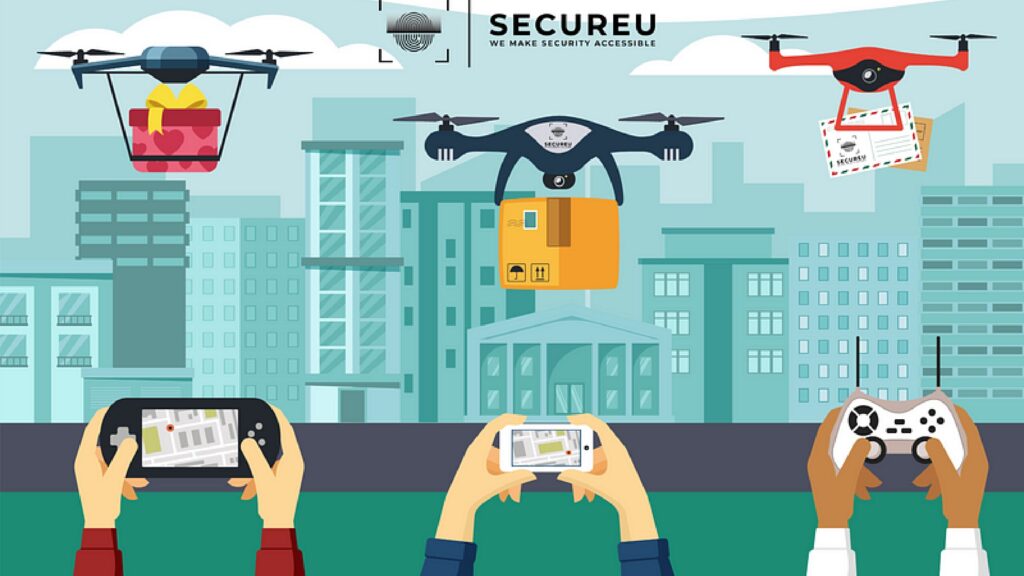
Drone Security: How to Protect Your Drone From Hackers Owing to the increasing use of drones in many industries, hackers may target drones. Drone security is essential and should be implemented well. Drones are becoming increasingly popular for not only recreational but also commercial purposes. You can find them in a number of industries where they can be used to transport goods and even used for surveillance. As drone usage increases, the matter of security becomes more pressing. Not considering the issue of privacy, rogue drones can harm not only property but also people which is why drone security is extremely important. This gives rise to the following questions: can drones be hacked? If yes, how would a hacker go about doing it? Can Drones Be Hacked? As drones are very much like computers, they are potential targets for hacking. Drones are controlled with the help of radio waves which means that attackers do not need physical access to the drone to control it. However, drones have security features and are not believed to be hacked very often. Regardless, they can be hacked and this is a fact that drone users need to be aware of along with drone security. Hackers do not need to be particularly experienced to hack a drone. Many software have been designed to hack into drones using wireless connections like Wi-Fi. How Can Someone Hack a Drone? Hacking a drone is very similar to hacking a computer. An attacker can access a drone from up to a mile away. All they need to do is to create a connection to the drone by intercepting the radio signal. As these radio signals are generally unencrypted there is an intermediate step to decode them with packet sniffers. After doing so, they block the signal and connect the drone to their device, manipulating the drone to work as they please. GPS spoofing is often used by hackers to send fake GPS coordinates to the drone’s receiver. Owing to this technique, the drone operator can be fooled into thinking that the drone is following the right flying pattern when it is actually being taken to a different location. The hacker may then crash the drone on purpose or steer it to the location of their choosing to access its data. It is worth noting that GPS spoofing can also be used against malicious drones. Compromised drones have the potential to build a backdoor into an enterprise’s wireless network, creating network interference and damaging productivity as well as profitability. In case of data theft, downtime incurred can possibly cause the business to lose a lot of money and even destroy its relationship with its customers. Hackers may even access proprietary information, allowing competitors to gain access to trade secrets. Despite all this, drones can be secured like any other wireless device using drone security methods. Drone Security Tips We now know why it is critical to implement security measures so that your drone is protected against threats. Check out the options given below to enhance drone security: Hacking Drones is Possible; Protect Your Drone with Drone Security A hacked drone may not have been one of your concerns, but as it is a possibility, drone security is essential. Hacked drones are vulnerable to theft. In some cases can also be used as weapons. Drone owners need to be aware of the threats and employ drone security to prevent their drones from being hacked. Although drones are primarily used for harmless purposes, drones with erratic behaviours can possibly be under the control of a hacker. This is why security professionals should be on the lookout for drones flying over their premises. Reach out to us today & let’s talk about how we can help you! Website: Secureu | E-mail: contact-us@secureu.in

Drone Security: How to Protect Your Drone From Hackers Read More »

Drone Security: How to Protect Your Drone From Hackers Owing to the increasing use of drones in many industries, hackers may target drones. Drone security is essential and should be implemented well. Drones are becoming increasingly popular for not only recreational but also commercial purposes. You can find them in a number of industries where they can be used to transport goods and even used for surveillance. As drone usage increases, the matter of security becomes more pressing. Not considering the issue of privacy, rogue drones can harm not only property but also people which is why drone security is extremely important. This gives rise to the following questions: can drones be hacked? If yes, how would a hacker go about doing it? Can Drones Be Hacked? As drones are very much like computers, they are potential targets for hacking. Drones are controlled with the help of radio waves which means that attackers do not need physical access to the drone to control it. However, drones have security features and are not believed to be hacked very often. Regardless, they can be hacked and this is a fact that drone users need to be aware of along with drone security. Hackers do not need to be particularly experienced to hack a drone. Many software have been designed to hack into drones using wireless connections like Wi-Fi. How Can Someone Hack a Drone? Hacking a drone is very similar to hacking a computer. An attacker can access a drone from up to a mile away. All they need to do is to create a connection to the drone by intercepting the radio signal. As these radio signals are generally unencrypted there is an intermediate step to decode them with packet sniffers. After doing so, they block the signal and connect the drone to their device, manipulating the drone to work as they please. GPS spoofing is often used by hackers to send fake GPS coordinates to the drone’s receiver. Owing to this technique, the drone operator can be fooled into thinking that the drone is following the right flying pattern when it is actually being taken to a different location. The hacker may then crash the drone on purpose or steer it to the location of their choosing to access its data. It is worth noting that GPS spoofing can also be used against malicious drones. Compromised drones have the potential to build a backdoor into an enterprise’s wireless network, creating network interference and damaging productivity as well as profitability. In case of data theft, downtime incurred can possibly cause the business to lose a lot of money and even destroy its relationship with its customers. Hackers may even access proprietary information, allowing competitors to gain access to trade secrets. Despite all this, drones can be secured like any other wireless device using drone security methods. Drone Security Tips We now know why it is critical to implement security measures so that your drone is protected against threats. Check out the options given below to enhance drone security: Hacking Drones is Possible; Protect Your Drone with Drone Security A hacked drone may not have been one of your concerns, but as it is a possibility, drone security is essential. Hacked drones are vulnerable to theft. In some cases can also be used as weapons. Drone owners need to be aware of the threats and employ drone security to prevent their drones from being hacked. Although drones are primarily used for harmless purposes, drones with erratic behaviours can possibly be under the control of a hacker. This is why security professionals should be on the lookout for drones flying over their premises. Reach out to us today & let’s talk about how we can help you! Website: Secureu | E-mail: contact-us@secureu.in

Why is Security Important in Cloud Computing?

Why is Security Important in Cloud Computing? To prepare for future success, businesses need to switch from on-premise hardware to the cloud to meet their computing needs. The cloud gives enterprises access to more applications while improving data accessibility to help teams collaborate better and provide easier content management. As organisations move toward their digital transformation strategy, they need to implement cloud security and integrate cloud-based tools and services into their infrastructure. Cloud security, also called cloud computing security, is a collection of procedures and technology that has been designed to tackle external as well as internal threats to business security. Digital transformation and cloud migration mean different things to different organisations, but both are driven by the same idea: a need for change. As enterprises get used to these concepts and head towards optimising their operational approach, many new challenges arise when they try to balance productivity levels and security. While new technologies enable organisations to advance their capabilities outside of on-premise infrastructure, transitioning to cloud-based environments can have severe adverse impacts if it is not done securely. Finding the right balance requires knowledge of how modern-day businesses can benefit from the use of cloud technologies while implementing the best cloud security practices. Why is Cloud Security Important? As most organisations are using cloud computing in one form or another these days, cloud computing security is critical to protect them. Gartner had predicted that the worldwide market for public cloud services would have grown by 23.1% in 2021 due to the high rate of adoption of public cloud services. While companies continue to migrate to the cloud, it is essential to understand the security requirements for data to remain safe. The responsibility of data asset security and accountability does not lie with third-party cloud computing providers who manage the infrastructure. Most cloud providers follow best security practices while proactively protecting the integrity of their servers. Yet, businesses need to make their own considerations when protecting data, applications, and workloads running on the cloud. As the digital world continues to evolve, security threats keep getting more advanced. Many of these threats target cloud computing providers because of an organisation’s lack of visibility in data access and movement. If organisations fail to take steps to improve their cloud computing security, they can face substantial governance and compliance risks while managing client information, irrespective of where it is stored. Regardless of the size of your business, cloud security is an important discussion that you need to have. Cloud infrastructure supports almost all facets of modern computing in all industries across multiple fields. Successful cloud adoption depends on putting satisfactory countermeasures in place to defend against cyberattacks. Irrespective of the type of cloud your company operates in, cloud security solutions and best practices are necessary to ensure business success and continuity. What is Meant by Cloud Security? Cloud computing security, or cloud security, is a set of policies, controls, procedures, and technologies that work in tandem to ensure the security of cloud-based systems, infrastructure, and data. These measures are designed to protect cloud data, support regulatory compliance and protect the privacy of customers. It also ensures user and device authentication, data and resource access control, and data privacy protection. Cloud computing security can protect a company’s data from distributed denial of service attacks, as well as malware, hackers, and unauthorised user access. Cloud security can be configured to meet the exact needs of the business. As these rules can be configured and managed in one place, administration overhead is reduced and IT teams can focus on other areas of business. The way cloud security is delivered depends on the individual cloud provider or the cloud security solutions in place. Implementation of cloud security processes is a joint responsibility, however, and should be taken care of by the business owner as well as the solution provider. What Are the Four Areas of Cloud Security? Cloud Security Risks Cloud computing security risks usually fall into one of the following categories: The aim of cloud security is to decrease the danger posed by these risks as much as possible. This is achieved by protecting data through encryption and other means, managing user authentication and access and remaining operational in the event of an attack. How Does SECUREU Provide Cloud Security? Cloud security is a concern for many businesses, which is why we at SECUREU aim to provide comprehensive cloud computing security solutions. Our experts analyse your cloud infrastructure and scan them to find security loopholes. Once vulnerabilities have been found, we monitor the system for other security events that may occur during the assessment. We ensure that all the IAM are set properly and no misconfigurations are present in the settings as well as in the cloud infrastructure. To make sure that your cloud infrastructure is as safe as possible, we check the requests coming to the cloud and ensure that it is not publicly accessible. Our team ensures that the sensitive data in your cloud cannot be leaked and that your business can operate without any hitches.

Why is Security Important in Cloud Computing? Read More »

Why is Security Important in Cloud Computing? To prepare for future success, businesses need to switch from on-premise hardware to the cloud to meet their computing needs. The cloud gives enterprises access to more applications while improving data accessibility to help teams collaborate better and provide easier content management. As organisations move toward their digital transformation strategy, they need to implement cloud security and integrate cloud-based tools and services into their infrastructure. Cloud security, also called cloud computing security, is a collection of procedures and technology that has been designed to tackle external as well as internal threats to business security. Digital transformation and cloud migration mean different things to different organisations, but both are driven by the same idea: a need for change. As enterprises get used to these concepts and head towards optimising their operational approach, many new challenges arise when they try to balance productivity levels and security. While new technologies enable organisations to advance their capabilities outside of on-premise infrastructure, transitioning to cloud-based environments can have severe adverse impacts if it is not done securely. Finding the right balance requires knowledge of how modern-day businesses can benefit from the use of cloud technologies while implementing the best cloud security practices. Why is Cloud Security Important? As most organisations are using cloud computing in one form or another these days, cloud computing security is critical to protect them. Gartner had predicted that the worldwide market for public cloud services would have grown by 23.1% in 2021 due to the high rate of adoption of public cloud services. While companies continue to migrate to the cloud, it is essential to understand the security requirements for data to remain safe. The responsibility of data asset security and accountability does not lie with third-party cloud computing providers who manage the infrastructure. Most cloud providers follow best security practices while proactively protecting the integrity of their servers. Yet, businesses need to make their own considerations when protecting data, applications, and workloads running on the cloud. As the digital world continues to evolve, security threats keep getting more advanced. Many of these threats target cloud computing providers because of an organisation’s lack of visibility in data access and movement. If organisations fail to take steps to improve their cloud computing security, they can face substantial governance and compliance risks while managing client information, irrespective of where it is stored. Regardless of the size of your business, cloud security is an important discussion that you need to have. Cloud infrastructure supports almost all facets of modern computing in all industries across multiple fields. Successful cloud adoption depends on putting satisfactory countermeasures in place to defend against cyberattacks. Irrespective of the type of cloud your company operates in, cloud security solutions and best practices are necessary to ensure business success and continuity. What is Meant by Cloud Security? Cloud computing security, or cloud security, is a set of policies, controls, procedures, and technologies that work in tandem to ensure the security of cloud-based systems, infrastructure, and data. These measures are designed to protect cloud data, support regulatory compliance and protect the privacy of customers. It also ensures user and device authentication, data and resource access control, and data privacy protection. Cloud computing security can protect a company’s data from distributed denial of service attacks, as well as malware, hackers, and unauthorised user access. Cloud security can be configured to meet the exact needs of the business. As these rules can be configured and managed in one place, administration overhead is reduced and IT teams can focus on other areas of business. The way cloud security is delivered depends on the individual cloud provider or the cloud security solutions in place. Implementation of cloud security processes is a joint responsibility, however, and should be taken care of by the business owner as well as the solution provider. What Are the Four Areas of Cloud Security? Cloud Security Risks Cloud computing security risks usually fall into one of the following categories: The aim of cloud security is to decrease the danger posed by these risks as much as possible. This is achieved by protecting data through encryption and other means, managing user authentication and access and remaining operational in the event of an attack. How Does SECUREU Provide Cloud Security? Cloud security is a concern for many businesses, which is why we at SECUREU aim to provide comprehensive cloud computing security solutions. Our experts analyse your cloud infrastructure and scan them to find security loopholes. Once vulnerabilities have been found, we monitor the system for other security events that may occur during the assessment. We ensure that all the IAM are set properly and no misconfigurations are present in the settings as well as in the cloud infrastructure. To make sure that your cloud infrastructure is as safe as possible, we check the requests coming to the cloud and ensure that it is not publicly accessible. Our team ensures that the sensitive data in your cloud cannot be leaked and that your business can operate without any hitches.

How Machine Learning Aids in Creating Secure Systems

How Machine Learning Aids in Creating Secure Systems It may be a surprise for some to know that machine learning is used in cybersecurity, but there are many ways in which Machine Learning in cybersecurity can help create secure systems that can withstand a wide array of attacks. Let’s take a closer look at how machine learning can help cybersecurity. What is Machine Learning? You can define Machine Learning as a branch of Artificial intelligence (AI) that enables software applications to more accurately predict outcomes by using data and algorithms to imitate the way humans learn. An example of Machine Learning is image recognition. Using machine learning, a computer can recognise an object as a digital image, according to the intensity of the pixels in the image. Well, how does Machine Learning work? Machine Learning teaches computers to think the way humans do: by learning from past experiences. Machine Learning algorithms use historical data as input, explore it, and identify patterns in it to give an output that requires almost no human intervention. Nearly any task can be automated with Machine Learning. What are the Advantages of Machine Learning in Cybersecurity? Machine learning enables computers to review large amounts of data and find specific trends and patterns that may possibly be missed by a human. It can be leveraged to understand past cyber-attacks and develop more effective defence strategies and responses. Machine Learning can be used in many domains within cybersecurity to improve security processes, and help security experts quickly identify, prioritise, deal with, and rectify new attacks. As Machine Learning can automate repetitive and time-consuming tasks, it can be used in cybersecurity to automate malware analysis, network log analysis, and even vulnerability assessments. Machine Learning algorithms can also be used in applications to detect attacks by analysing large data sets of security events and identifying patterns that show malicious activity. When similar events are noticed, they can be dealt with automatically by the trained ML model. Malicious emails can be identified with the use of the latest Machine Learning algorithm predictive URL classification models. Traditional phishing detection techniques lack the speed and accuracy that Machine Learning provides. How Can Machine Learning Help Cybersecurity? Having Machine Learning in cybersecurity is a good idea for a number of reasons. Using machine learning, cybersecurity systems can study patterns and use them in the prevention of attacks that are similar and respond to uncertain behaviour. It can aid cybersecurity teams in being proactive when it comes to preventing threats and responding to active attacks as they happen. Machine Learning in cybersecurity helps decrease the time spent performing routine tasks, thus allowing organisations to use their resources in more effective ways. Organisations are forced to regularly track and correlate a vast number of external and internal data points across their infrastructure and users. This volume of information simply cannot be managed with only a small group of people. This is where Machine Learning in cybersecurity can help. It can analyse huge amounts of data and recognise patterns and predict threats, all at machine speed. Some of the ways machine learning helps cybersecurity are listed below: The Future of Cybersecurity with Machine Learning Machine learning can help defend against the increasingly sophisticated attacks that hackers launch against corporate networks. Machine learning can be used in cybersecurity to respond to cyberattacks and defeat bad actors. A report by Capgemini Research Institute states that 61% of organisations say that they would not be able to detect critical threats without AI, whereas 69% believe that AI will be essential to respond to cyberattacks. The market of AI in cybersecurity is expected to grow to $46.3 billion by 2027. Machine learning technologies can help cybersecurity by detecting anomalies, predicting future data breaches, and even responding to them in real time. The uses of Machine Learning in cybersecurity are expected to improve with time. These technologies have already proven to be very useful in many cases like detecting fraud and scoring network risk. They are already being used to rapidly detect intrusions, identify suspicious behaviours, and also to detect malware. Limitations of Machine Learning in Cybersecurity: Machine Learning can make cybersecurity simple, proactive, cheap, and much more effective than it is right now. However, these things can only be achieved if the underlying data that the algorithms are trained on provide a full picture of the environment. Machine Learning and AI are completely dependent on the data that is provided to them. Thus, if the data is bad, the security provided by the Machine Learning algorithms will also be bad and ineffective. Machine learning is not risk-free. There may still be instances where security systems that employ machine learning may fail. However, the use of AI and Machine Learning in cybersecurity is expected to get much better with time.

How Machine Learning Aids in Creating Secure Systems Read More »

How Machine Learning Aids in Creating Secure Systems It may be a surprise for some to know that machine learning is used in cybersecurity, but there are many ways in which Machine Learning in cybersecurity can help create secure systems that can withstand a wide array of attacks. Let’s take a closer look at how machine learning can help cybersecurity. What is Machine Learning? You can define Machine Learning as a branch of Artificial intelligence (AI) that enables software applications to more accurately predict outcomes by using data and algorithms to imitate the way humans learn. An example of Machine Learning is image recognition. Using machine learning, a computer can recognise an object as a digital image, according to the intensity of the pixels in the image. Well, how does Machine Learning work? Machine Learning teaches computers to think the way humans do: by learning from past experiences. Machine Learning algorithms use historical data as input, explore it, and identify patterns in it to give an output that requires almost no human intervention. Nearly any task can be automated with Machine Learning. What are the Advantages of Machine Learning in Cybersecurity? Machine learning enables computers to review large amounts of data and find specific trends and patterns that may possibly be missed by a human. It can be leveraged to understand past cyber-attacks and develop more effective defence strategies and responses. Machine Learning can be used in many domains within cybersecurity to improve security processes, and help security experts quickly identify, prioritise, deal with, and rectify new attacks. As Machine Learning can automate repetitive and time-consuming tasks, it can be used in cybersecurity to automate malware analysis, network log analysis, and even vulnerability assessments. Machine Learning algorithms can also be used in applications to detect attacks by analysing large data sets of security events and identifying patterns that show malicious activity. When similar events are noticed, they can be dealt with automatically by the trained ML model. Malicious emails can be identified with the use of the latest Machine Learning algorithm predictive URL classification models. Traditional phishing detection techniques lack the speed and accuracy that Machine Learning provides. How Can Machine Learning Help Cybersecurity? Having Machine Learning in cybersecurity is a good idea for a number of reasons. Using machine learning, cybersecurity systems can study patterns and use them in the prevention of attacks that are similar and respond to uncertain behaviour. It can aid cybersecurity teams in being proactive when it comes to preventing threats and responding to active attacks as they happen. Machine Learning in cybersecurity helps decrease the time spent performing routine tasks, thus allowing organisations to use their resources in more effective ways. Organisations are forced to regularly track and correlate a vast number of external and internal data points across their infrastructure and users. This volume of information simply cannot be managed with only a small group of people. This is where Machine Learning in cybersecurity can help. It can analyse huge amounts of data and recognise patterns and predict threats, all at machine speed. Some of the ways machine learning helps cybersecurity are listed below: The Future of Cybersecurity with Machine Learning Machine learning can help defend against the increasingly sophisticated attacks that hackers launch against corporate networks. Machine learning can be used in cybersecurity to respond to cyberattacks and defeat bad actors. A report by Capgemini Research Institute states that 61% of organisations say that they would not be able to detect critical threats without AI, whereas 69% believe that AI will be essential to respond to cyberattacks. The market of AI in cybersecurity is expected to grow to $46.3 billion by 2027. Machine learning technologies can help cybersecurity by detecting anomalies, predicting future data breaches, and even responding to them in real time. The uses of Machine Learning in cybersecurity are expected to improve with time. These technologies have already proven to be very useful in many cases like detecting fraud and scoring network risk. They are already being used to rapidly detect intrusions, identify suspicious behaviours, and also to detect malware. Limitations of Machine Learning in Cybersecurity: Machine Learning can make cybersecurity simple, proactive, cheap, and much more effective than it is right now. However, these things can only be achieved if the underlying data that the algorithms are trained on provide a full picture of the environment. Machine Learning and AI are completely dependent on the data that is provided to them. Thus, if the data is bad, the security provided by the Machine Learning algorithms will also be bad and ineffective. Machine learning is not risk-free. There may still be instances where security systems that employ machine learning may fail. However, the use of AI and Machine Learning in cybersecurity is expected to get much better with time.

Securing your Web3 Assets!

Securing your Web3 Assets! Web3.0, Blockchain, Ethereum, Cryptocurrency, NFTs, etc. let me use all the buzzwords to get people over to my blog post. Jokes aside I wanted to focus on Web3.0 assets and related products that I mentioned above because these are the new shiny toys of the technology world. Just like any other shiny toy on the market, everyone is trying to get these for themselves and not everyone is following the legal way to obtain them. Cyber attacks in the Web 3.0 domain have gone rampant and it does not seem that they will be coming to an end any time soon. Previously when the internet age began most of the world was unaware of its implications and the security issues that might arise with it. Luckily after all this time, we have had several learnings from the past and if we generate enough awareness among the people we might not have to encounter as many cyberattacks in the future as we do today. If you are someone who has also invested a ton of money in cryptocurrencies and NFTs or are thinking to do so I think it is extremely important and beneficial for you to give a read ahead. Top Five Attack Vectors There have been several different cyberattacks that have been carried out in the past few years trying to dupe people out of their cryptocurrency and NFTs. Once good thing is the most of them can be categorized under the few attack vectors mentioned below. So, if you manage to keep yourself aware and be on the lookout for such attacks against you, you can protect yourself from nearly every malicious hacker out there. Let’s dive in and get a basic understanding of these various attack scenarios and how one can protect themselves. Cloning crypto wallets is one of the most common attacks right now. As with any normal wallet, crypto wallets consist of the majority of your crypto assets and thus they become an extremely attractive point of attack for attackers. To help customers recover their crypto wallets companies provide them with a set of 12 to 24 words, also known as the “seed phrase”. It acts as a private key and can be utilized to regain access to your wallet in case it is lost or destroyed. The issue is the attackers try to social engineer their victims to obtain their seed phrase and many of these unsuspecting people completely unaware of the importance of these words provide them to these attackers without a second thought. Once these attackers have your keys to the crypto wallets they can extract everything you have in your wallet within seconds and you won’t be able to take any steps to obtain them back. 2. Fake customer agents This is a variation of the social engineering attacks that I just mentioned above but it needs to be stated separately because of how common this specific methodology has become. Attackers have been utilizing these methods to extract the seed phrase from the users by acting as if they are calling from the company whose crypto-wallets their victims own. They ask their victims to tell them the seed phrase as only then they will be able to establish that they are the rightful owner of the crypto-wallet and some of their victims do tell their seed phrase and get hacked. These fake customer agents also utilize the same methodology to obtain the OTPs when hacking people who have multi-factor authentication enabled. They ask the customers for the OTP under the pretext to establish trust with their victims and then utilize the OTP to then hack into their email accounts and initiate resetting passwords of their online crypto accounts and then transferring everything to their accounts. 3. Whales The cyberattacks that take place in this space are completely out of the world. The word “whales” is used to describe those high-net-worth entities which have huge amounts of assets with them, in this particular case crypto-assets. It is estimated that there are nearly 40,000 whales, which combined own nearly 80% of all NFTs out there. This makes these whales extremely attractive to hackers. Also as these entities have a huge amount of assets with them, so malicious hackers are comfortable with spending a ton of money to hack these people or organizations. As the rewards outweigh the cost of the attack multi-folds. The attackers spend a lot of time carefully figuring out the “whales”. People create entire fake projects and run the Discord servers and Twitter accounts associated with it for months sometimes to be able to phish these whales. Whales should be on the lookout for such projects that seems fishy or do not have tons of people backing them or if the code for their smart contract has not been made public. They should make sure to follow the defence-in-depth strategy and utilize several security features to lock down their wallets, with strong passwords and multi-factor authentication being the bare minimum. 4. ENS Domains ENS, Ethereum Name Service domains have gathered loads of popularity as they provide easy-to-remember names to help find other people’s cryptocurrency wallet addresses. This is extremely useful for people regularly transferring cryptocurrencies to each other as it eases the process. The sad news is anyone can buy an ENS domain of whatever name they prefer it to be and then carry out an attack against their victims by tricking them. These ENS domain names can be very similar to that of the person they are trying to impersonate and then convince their victim to transfer their crypto assets on this fake wallet instead of the intended person. These addresses can be also up for grabs once the previous person doesn’t resubscribe to the same wallet address and this can also lead to phishing attacks. 5. Malicious Smart Contracts Attackers sometimes focus on exploiting genuine bugs in legitimate smart contracts but it requires too much effort and knowledge to carry out such an attack. So

Securing your Web3 Assets! Read More »

Securing your Web3 Assets! Web3.0, Blockchain, Ethereum, Cryptocurrency, NFTs, etc. let me use all the buzzwords to get people over to my blog post. Jokes aside I wanted to focus on Web3.0 assets and related products that I mentioned above because these are the new shiny toys of the technology world. Just like any other shiny toy on the market, everyone is trying to get these for themselves and not everyone is following the legal way to obtain them. Cyber attacks in the Web 3.0 domain have gone rampant and it does not seem that they will be coming to an end any time soon. Previously when the internet age began most of the world was unaware of its implications and the security issues that might arise with it. Luckily after all this time, we have had several learnings from the past and if we generate enough awareness among the people we might not have to encounter as many cyberattacks in the future as we do today. If you are someone who has also invested a ton of money in cryptocurrencies and NFTs or are thinking to do so I think it is extremely important and beneficial for you to give a read ahead. Top Five Attack Vectors There have been several different cyberattacks that have been carried out in the past few years trying to dupe people out of their cryptocurrency and NFTs. Once good thing is the most of them can be categorized under the few attack vectors mentioned below. So, if you manage to keep yourself aware and be on the lookout for such attacks against you, you can protect yourself from nearly every malicious hacker out there. Let’s dive in and get a basic understanding of these various attack scenarios and how one can protect themselves. Cloning crypto wallets is one of the most common attacks right now. As with any normal wallet, crypto wallets consist of the majority of your crypto assets and thus they become an extremely attractive point of attack for attackers. To help customers recover their crypto wallets companies provide them with a set of 12 to 24 words, also known as the “seed phrase”. It acts as a private key and can be utilized to regain access to your wallet in case it is lost or destroyed. The issue is the attackers try to social engineer their victims to obtain their seed phrase and many of these unsuspecting people completely unaware of the importance of these words provide them to these attackers without a second thought. Once these attackers have your keys to the crypto wallets they can extract everything you have in your wallet within seconds and you won’t be able to take any steps to obtain them back. 2. Fake customer agents This is a variation of the social engineering attacks that I just mentioned above but it needs to be stated separately because of how common this specific methodology has become. Attackers have been utilizing these methods to extract the seed phrase from the users by acting as if they are calling from the company whose crypto-wallets their victims own. They ask their victims to tell them the seed phrase as only then they will be able to establish that they are the rightful owner of the crypto-wallet and some of their victims do tell their seed phrase and get hacked. These fake customer agents also utilize the same methodology to obtain the OTPs when hacking people who have multi-factor authentication enabled. They ask the customers for the OTP under the pretext to establish trust with their victims and then utilize the OTP to then hack into their email accounts and initiate resetting passwords of their online crypto accounts and then transferring everything to their accounts. 3. Whales The cyberattacks that take place in this space are completely out of the world. The word “whales” is used to describe those high-net-worth entities which have huge amounts of assets with them, in this particular case crypto-assets. It is estimated that there are nearly 40,000 whales, which combined own nearly 80% of all NFTs out there. This makes these whales extremely attractive to hackers. Also as these entities have a huge amount of assets with them, so malicious hackers are comfortable with spending a ton of money to hack these people or organizations. As the rewards outweigh the cost of the attack multi-folds. The attackers spend a lot of time carefully figuring out the “whales”. People create entire fake projects and run the Discord servers and Twitter accounts associated with it for months sometimes to be able to phish these whales. Whales should be on the lookout for such projects that seems fishy or do not have tons of people backing them or if the code for their smart contract has not been made public. They should make sure to follow the defence-in-depth strategy and utilize several security features to lock down their wallets, with strong passwords and multi-factor authentication being the bare minimum. 4. ENS Domains ENS, Ethereum Name Service domains have gathered loads of popularity as they provide easy-to-remember names to help find other people’s cryptocurrency wallet addresses. This is extremely useful for people regularly transferring cryptocurrencies to each other as it eases the process. The sad news is anyone can buy an ENS domain of whatever name they prefer it to be and then carry out an attack against their victims by tricking them. These ENS domain names can be very similar to that of the person they are trying to impersonate and then convince their victim to transfer their crypto assets on this fake wallet instead of the intended person. These addresses can be also up for grabs once the previous person doesn’t resubscribe to the same wallet address and this can also lead to phishing attacks. 5. Malicious Smart Contracts Attackers sometimes focus on exploiting genuine bugs in legitimate smart contracts but it requires too much effort and knowledge to carry out such an attack. So

Scroll to Top